A North Texas July is its own weather system. By mid-afternoon the sidewalk off Inwood Road can hit temperatures that burn a paw pad in seconds, and the air sits at ninety-eight degrees with the kind of humidity that makes a short walk feel like a long one. If you’re choosing a puppy in Dallas–Fort Worth, the heat isn’t a footnote — it’s one of the first real questions worth asking. Some dogs are built for it. Some are not, no matter how much you love the look of them.
How a Dog Actually Cools Itself
Start here, because it explains everything that follows. Dogs barely sweat — a little through the paw pads, that’s it. Their real cooling system is the pant: fast, shallow breathing that moves air across a wet tongue and the lining of the mouth, carrying heat out as moisture evaporates.
That means a dog’s tolerance for a Texas summer comes down to plumbing. A long muzzle is a long radiator. Air moves freely, evaporation works, heat leaves. A short, pushed-in face has the same job to do through a much smaller opening — so the same hundred-degree afternoon hits a flat-faced dog far harder than a long-nosed one. Coat color, body size, and age stack on top of that, but airflow through the nose and throat is the foundation.
Breeds Built for the Heat
When DFW families ask us which dogs settle in easiest through the warm months, a few patterns hold up. None of these are heatproof — no dog is — but they start with the right equipment.
- Whippets and other slim sighthounds. A long muzzle, a thin single coat, and almost no insulating bulk. They run hot in the literal sense, then cool down fast in the shade.
- Basenjis. Bred near the equator, short-coated, fastidious, and famously low-odor. They handle warmth about as naturally as a dog can.
- Chihuahuas. Tiny, short-coated, and originally a desert-region breed. Their size works for them in the heat (less mass to cool) and against them in winter — a fair trade in North Texas.
- Min Pins and smooth-coat Dachshunds. Compact, sleek, and efficient, with proper muzzles that do their job.
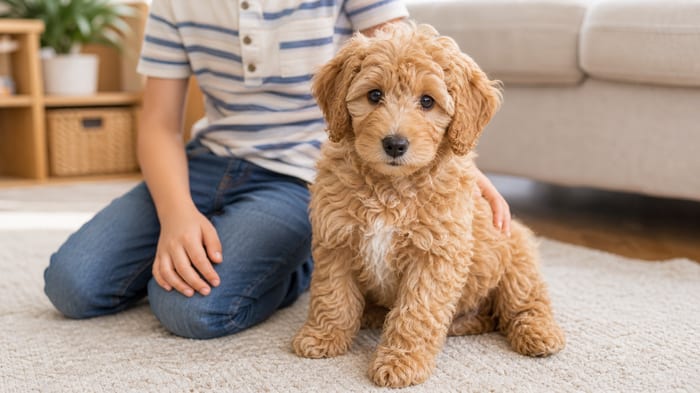
- Many doodles and poodle mixes — with a catch. A Goldendoodle or Labradoodle has a long muzzle and pants efficiently, but that signature curly coat traps heat when it’s left long. Kept in a shorter summer cut, they do well across a DFW summer. Left shaggy through August, they suffer. The breed isn’t the problem; the groom schedule is.
If you want a thin-coated, long-nosed dog that takes the heat in stride, a whippet is hard to beat. For families set on a doodle, a well-groomed Goldendoodle is a comfortable warm-climate dog — the coat just becomes part of the summer routine.
The Honest Part: Flat-Faced Breeds and Texas
This is where we’d rather tell you the truth than make an easy sale. Brachycephalic breeds — French Bulldogs, Pugs, English and Olde English Bulldogs, Boston Terriers, Shih Tzus, Pekingese — are wonderful dogs. They are also the ones most at risk when the temperature climbs, and DFW climbs higher and longer than most of the country.
That short muzzle means a smaller airway and a less efficient pant. On a ninety-five-degree Mansfield afternoon, a Frenchie can overheat in the time it takes to walk to the mailbox and back. Vets across hot states see the same emergency every summer, and it is genuinely dangerous — heatstroke in a flat-faced dog moves fast.
None of this means a flat-faced breed can’t live a good life here. Plenty do, and thrive. It means the owner has to do more of the work: walks only in the cool of early morning or after sundown, air conditioning that stays on when you’re out, water always within reach, and a hard rule about never leaving the dog in a car, not even for a minute, not even with the windows cracked. If you can commit to that, a French Bulldog can be a perfectly happy Dallas dog. If you can’t, choose a longer-nosed breed and save yourself the worry — that’s the more loving call, not the lesser one.
Reading the Warning Signs
Heat stress doesn’t announce itself politely. Learn the early signals so you can act before it becomes an emergency:
- Heavy, frantic panting that doesn’t ease up in the shade
- Thick, ropey drool or a dry, tacky mouth
- Bright red or, worse, pale gums
- Stumbling, weakness, or a dog that lies down and won’t get up
- Glassy, distant eyes or vomiting
If you see these, get the dog cool and get help. Move into shade or AC, offer (don’t force) cool water, wet the belly and paws with cool — not ice-cold — water, and call your vet on the way in. With a brachycephalic breed, skip the wait-and-see entirely; head straight to the clinic.
Living With Any Dog Through a DFW Summer
Breed choice gets you most of the way. Daily habits do the rest, and they apply to a heat-hardy Whippet just as much as to a Pug.
- Walk on the clock, not the calendar. Before about 8 a.m. and after sundown are your windows from June through September. Midday is for the backyard shade or the living room.
- Test the pavement. Press the back of your hand to the sidewalk for seven seconds. If you can’t hold it there, it’s too hot for paws — asphalt off a Fort Worth strip-mall lot can run far hotter than the air.
- Water everywhere, always. Multiple bowls, refreshed often. A small dog dehydrates quickly.
- Mind the car. A parked car in a Texas lot becomes an oven in minutes. There is no safe version of leaving a dog inside one.
- Watch the young and the new. Puppies regulate heat poorly until they mature, and a dog that just moved here from a cooler climate needs a few weeks to acclimate.
Frequently Asked Questions
What is the single most heat-tolerant dog breed for Texas?
There’s no one winner, but slim, short-coated, long-muzzled breeds lead the pack — Whippets, Basenjis, and smooth-coat smaller breeds like Chihuahuas and Min Pins. The shared traits matter more than any single name: a proper muzzle for efficient panting, a thin coat, and a lean build.
Can French Bulldogs and Pugs live in Dallas–Fort Worth?
Yes, but with real commitment. Flat-faced breeds overheat far faster than long-nosed dogs, so they need air conditioning, walks only in the cool hours, constant water access, and an absolute rule against being left in a hot car. Many DFW families manage this well — it just takes more day-to-day care than a heat-hardy breed does.
Do doodles handle the Texas heat?
Most do, as long as the coat is managed. A Goldendoodle or Labradoodle has a long muzzle and pants efficiently, but its curly coat traps heat when grown out. A shorter summer cut makes a real difference from June through September.
Should I shave my dog to keep it cool in summer?
Not usually. For double-coated breeds, the undercoat actually insulates against heat and protects skin from sunburn, so shaving can backfire. For doodle-type curly coats, a trim (not a shave to the skin) helps. When in doubt, ask your groomer about a breed-appropriate summer length.
How early in the day should I walk my dog in DFW summer?
Aim for before 8 a.m. or after sunset. Always do the seven-second pavement test first — if the surface is too hot for the back of your hand, it’s too hot for paws, regardless of the air temperature.
Choosing With the Climate in Mind
The best dog for Texas heat is, in the end, the dog whose body and your habits both fit the place you live. A long muzzle and a manageable coat give a puppy a head start on a North Texas summer; a flat face asks more of you in return. Neither answer is wrong — they’re just different commitments.
If you’re weighing breeds with the climate in front of mind, that’s exactly the conversation our team has every day. Come browse the puppies available now across our two DFW locations, and ask us anything about how a given breed handles the heat — a clear answer is the whole point. We’re happy to point you toward a puppy that’s built for the summers you’ll actually be living through.