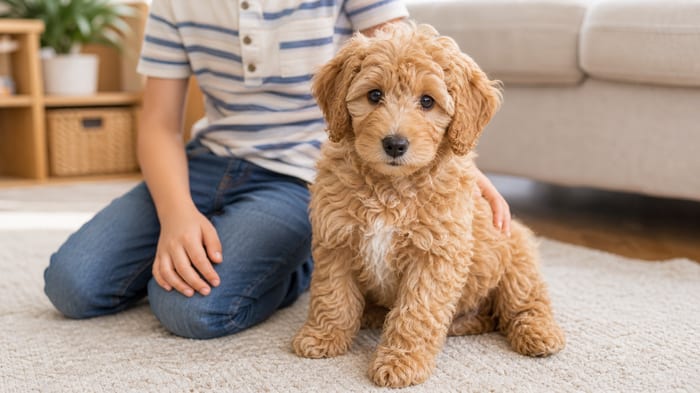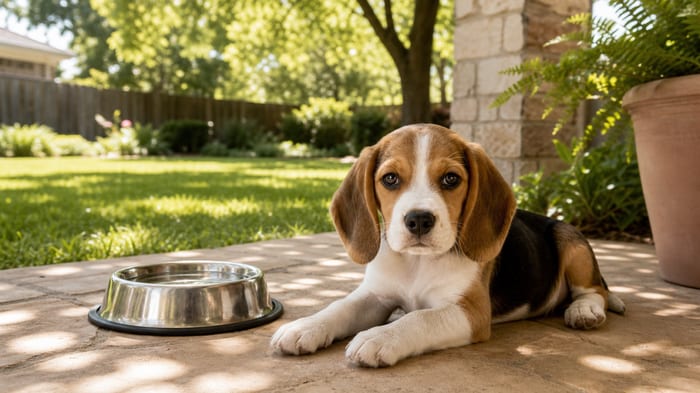
A Cavapoo is a Cavalier King Charles Spaniel crossed with a Poodle, and that single sentence explains most of what people end up loving — and underestimating — about the breed. It is small, soft, low-shedding, and wired to stay close. It is also a dog that genuinely needs your company and your time with a comb. This guide walks through what living with one actually asks of you, so you can decide before, not after.
Where the Cavapoo Comes From
The Cavapoo is a designer cross, not a purebred with centuries of standardization behind it. You are blending two parents with very different jobs: a Cavalier bred to be a companion that follows you room to room, and a Poodle bred to be sharp, athletic, and light on shedding. Most Cavapoos land somewhere between those two — sweet and people-focused from the Cavalier side, smart and trainable from the Poodle side.
Because it is a cross, no two litters are identical. A first-generation Cavapoo (one Cavalier parent, one Poodle parent) can swing toward either side in coat, size, and energy. That variability is normal, and it is the single most useful thing to understand before you fall for a photo. You are not buying a guaranteed outcome; you are buying a puppy whose tendencies you can read but not script.
What a Cavapoo Is Actually Like to Live With
The defining Cavapoo trait is attachment. This is a dog that wants to be near you — on the couch, underfoot in the kitchen, trailing you down the hall. People call them “velcro dogs,” and it is accurate. For a family that’s home a lot or works from home, that closeness is the whole appeal. For a household gone ten hours a day, it’s the breed’s hardest edge: Cavapoos are prone to separation anxiety when they’re left alone too long, too often.
They tend to be gentle, eager to please, and quick to read the mood of a room. That makes them strong with kids, easy to socialize, and friendly toward other dogs when introduced well. The Poodle influence gives most of them real intelligence, so basic training comes fast — they want to get it right. The flip side of that sensitivity is that harsh correction backfires; these dogs fold under a sharp voice and bloom under patient, consistent practice.
How Much Exercise a Cavapoo Really Needs
Here’s where Cavapoos are easy to misjudge. They look like pure lap dogs, and they are happy to be one — but the Poodle half means they’re not couch ornaments. Most adult Cavapoos do well on 30 to 60 minutes of activity a day: a couple of walks, some yard time, a few rounds of fetch or a puzzle toy.
The good news for North Texas is that this is a manageable load even when the weather isn’t. During a Dallas–Fort Worth summer, you can split that into a cool morning walk and an evening one, and fill the hot middle of the day with indoor games and short training sessions. A Cavapoo’s brain tires as fast as its legs, so a ten-minute “find the treat” game can take the edge off an antsy afternoon better than another lap of the block. They settle beautifully once their needs are met — that’s the Cavalier in them — but a bored, under-walked Cavapoo gets clingy, chewy, and loud.
The Grooming Truth Nobody Mentions Until Later
Low-shedding does not mean low-maintenance. This is the part new Cavapoo owners most often learn the hard way. That soft, wavy-to-curly coat doesn’t drop hair on your floors — it traps it, which means it mats if you don’t stay ahead of it.
Plan for a real grooming routine:
- Brushing several times a week, ideally most days, working down to the skin and not just over the top. The coat behind the ears, under the legs, and around the collar mats first.
- A professional groom roughly every six to eight weeks for a trim, bath, nails, and ears — budget for it the way you’d budget for any standing appointment.
- Regular ear checks, since the floppy Cavalier-style ears hold moisture and are prone to infection, especially relevant in humid stretches.
- Tear-stain wiping for the lighter-coated dogs, which is cosmetic but worth a daily pass.
None of this is hard. It’s just constant. If a weekly brushing commitment sounds like a chore now, it will feel like one later — that’s worth being honest with yourself about before you choose this breed over a smoother-coated dog.
Cavapoo Health to Know
A Cavapoo is generally a hardy little dog with a typical lifespan of 12 to 15 years, but a cross inherits the watch-list of both parents. Knowing these isn’t about expecting problems — it’s about asking the right questions and watching the right things:
- Heart (mitral valve disease) runs in Cavaliers, so heart health is the line of questioning that matters most with the Cavalier side.
- Eyes, including progressive retinal atrophy, show up in both parent breeds.
- Knees (luxating patella) are common in small dogs generally and worth a vet’s check.
- Ears, as noted, need routine cleaning to head off infection.
Responsible breeding reduces the odds on the inherited conditions, which is exactly why the source of your puppy matters as much as the breed itself. Happy from the start is a beginning state, not a promise — keep up with vet visits, keep the weight in check, and you give a Cavapoo the best shot at the full back half of that lifespan.
So — Is a Cavapoo Right for You?
Run yourself through this honestly. A Cavapoo is likely a strong fit if:
- Someone is home most of the day, or your schedule has built-in company.
- You want a small, gentle, kid-friendly dog rather than a guard dog or a jogging partner.
- You’re genuinely fine with weekly brushing and a standing grooming bill.
- You want low shedding for allergy or tidiness reasons and understand that “low” isn’t “none.”
It’s probably the wrong call if the house empties for long workdays with no plan for the dog, if grooming upkeep sounds like a hassle you’d resent, or if you want a low-touch, independent breed. There’s no shame in that — it just points you toward a different dog.
If you’re weighing a Cavapoo against its closest cousin, it’s worth reading our Cavapoo and Cockapoo comparison before you decide; the spaniel half of each makes a bigger difference than the shared Poodle does. And when you’re ready to meet one in person, you can see which Cavapoo puppies are currently with us, or browse the wider small and toy breeds we keep across our two DFW locations.
Cavapoo Questions, Answered
Are Cavapoos hypoallergenic?
No dog is truly hypoallergenic, but Cavapoos are low-shedding and produce less loose dander, which many allergy-sensitive families tolerate well. The catch is that it varies dog to dog, and the curlier, more Poodle-leaning coats tend to shed least. If allergies are the deciding factor, spend real time around an individual puppy before committing.
How big does a Cavapoo get?
Most Cavapoos mature to roughly 9 to 18 pounds and 9 to 14 inches tall, depending on whether the Poodle parent was a Toy or Miniature. They’re a true small-breed companion, not a teacup — and adult size in a cross is an estimate, not a guarantee.
Are Cavapoos good with kids and other pets?
Generally yes. Their gentle, people-pleasing temperament makes them well suited to families and friendly with other dogs when socialized early. As with any small dog, teach children to handle them calmly and supervise play with very young kids.
How much grooming does a Cavapoo need?
Plan on brushing most days to prevent mats, plus a professional groom every six to eight weeks and routine ear cleaning. The coat is low-shedding but high-tending — that trade-off is the single biggest surprise for new owners.
Can a Cavapoo handle the Texas heat?
With sensible routines, yes. Walk in the cool of the morning or evening during DFW summers, keep water and shade close, and use indoor games on triple-digit afternoons. Their moderate exercise needs make hot-weather scheduling easier than it is for high-drive breeds.