People rarely walk into our locations asking for a Goldendoodle or a Labradoodle. They walk in asking for “a doodle” — the soft coat, the friendly face, the dog that won’t carpet the couch in hair. Then the real question surfaces, usually about ten minutes in: which one actually fits the life you already live? That’s the question worth answering, and it has less to do with the breed chart than you’d think.
The Two Bloodlines, Plainly
A Goldendoodle is a Golden Retriever crossed with a Poodle. A Labradoodle is a Labrador Retriever crossed with a Poodle. The Poodle half is the shared parent — it’s where both get the curl, the cleverness, and the lighter shedding people are really after. The difference lives in the other half.
Golden Retrievers are soft-tempered, attentive, a touch sensitive. Labradors are bouncier, busier, built to work and play hard. So the same Poodle smarts arrive wearing two different personalities. Once you see that, the rest of the comparison stops being a list of specs and starts being a question about your household.
What Their Days Actually Look Like
The biggest day-to-day gap between these two is energy, and it shows up by mid-afternoon.
A Goldendoodle is usually content with a solid walk, a play session, and a stretch of being near you while you do ordinary things. They settle. They’re the dog that flops by your feet while you answer email, then perks up for a trip to the backyard. That softer wiring also makes them quick to read a room — many families say their Goldendoodle seems to notice a bad day before they’ve said a word.
A Labradoodle keeps a fuller calendar. Plan on 60 to 90 minutes of real activity, split across the day — a long walk, fetch, a training game, something for the body and the brain. Give them that and they’re cheerful and easy. Skip it for a few days and they’ll invent their own enrichment, which tends to involve your baseboards. They’re not high-maintenance, exactly. They’re just honest about needing a job.
A useful gut check: picture a rainy Tuesday with no plans. A Goldendoodle naps it off. A Labradoodle will be standing at the door looking at you like you forgot something.
Coat, Shedding, and the Allergy Question
This is the part allergy-prone families came for, so here’s the honest version.
No dog is truly hypoallergenic. The proteins that set off allergies live in dander and saliva, not just loose hair — so even a low-shedding coat is “low,” never “none.” That said, both of these dogs shed far less than a purebred Retriever, and a curlier, more Poodle-leaning coat sheds the least of all.
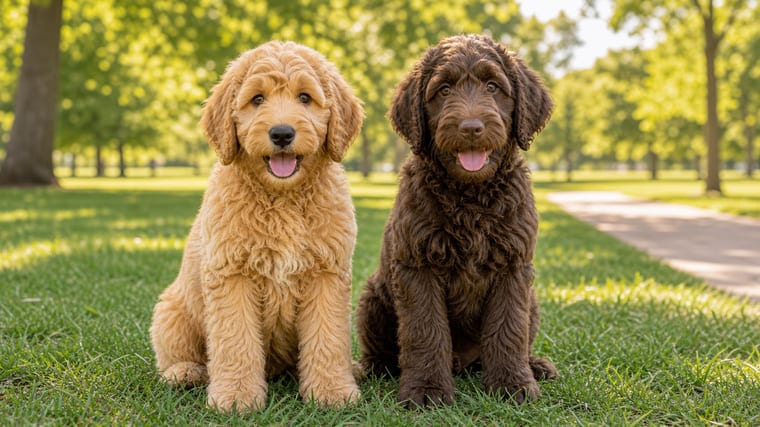
- Goldendoodle coat: wavy to curly, notably soft, often in cream, apricot, red, or chocolate. The tighter the curl, the less you’ll find on your clothes.
- Labradoodle coat: ranges from a soft fleece to a slightly coarser wool. Early-generation (F1) pups can carry more Labrador in the coat and shed a little more; multigenerational lines tend toward a steadier, lower-shedding fleece.
For both, the grooming math is similar and worth knowing before you commit: brush a few times a week so the coat doesn’t mat, and budget for a professional groom roughly every four to six weeks. The curl that keeps hair off your couch is the same curl that knots if you ignore it.
Sizes, and How Long You’re Signing Up For
Doodles come in a range of sizes, which is part of why they suit so many DFW homes — from a Plano two-story to a smaller place near downtown Dallas.
| Goldendoodle | Labradoodle | |
|---|---|---|
| Mini | ~15–35 lbs | ~15–25 lbs |
| Medium | ~35–50 lbs | ~30–45 lbs |
| Standard | ~50–90 lbs | ~50–65 lbs |
| Typical lifespan | ~10–15 years | ~12–15 years |
A few things behind the numbers. Mini Goldendoodles have been the steadiest request we get from apartment and townhome owners — full doodle character in a smaller footprint. Standard Labradoodles tend to be leaner and more athletic than a Standard Goldendoodle of similar weight; that build matches their energy. And smaller dogs in both breeds generally live toward the longer end of the range. Whichever you pick, you’re committing to well over a decade — the first chapter of a fifteen-year story, not a season.
Training: Same Smarts, Different Buttons
Both inherit Poodle intelligence, which means both learn fast. How you get the learning differs.
A Goldendoodle responds to warmth. Praise, treats, a happy voice — they lean in. The flip side of that sensitivity is that harsh corrections backfire; a sharp tone can shut them down for the rest of the session. Keep it positive and they’ll surprise you.
A Labradoodle learns just as quickly but burns through a lesson faster and then wants more. The trick isn’t repetition, it’s variety — new puzzles, fresh tricks, a reason to keep thinking. Channel that drive and you get a brilliant dog. Leave it idle and the brain goes looking for trouble on its own.
For either one, the single best investment is early socialization and a puppy class before bad habits set in. Texas law keeps puppies with their litter until at least eight weeks, which gives them a head start on the social skills that make the rest of training easier.
Picking the One That Fits Your Home
Strip away the charts and it comes down to a handful of honest questions:
- How full is your week already? Stretched thin → Goldendoodle. Looking for an excuse to get outside more → Labradoodle.
- Who’s at home? Toddlers and a quieter house often pair well with a Goldendoodle’s gentler patience. Older, active kids can be a Labradoodle’s favorite teammates.
- What’s your space? A Mini of either breed fits smaller DFW living; Standards do best with room to move and a real exercise habit.
- Other pets? Both socialize well; a Goldendoodle tends to settle in more quietly, while a bouncy Labradoodle may be a lot for an older cat at first.
There’s no wrong answer here — only a better-fitting one. The dog that matches your actual life, not your ideal weekend, is the one that thrives.
A Note From Our Floor
Here’s what we tell families who can’t decide: come meet a few. A breed chart can’t show you how a particular puppy greets a stranger, or which one parks itself in your lap and won’t leave. We keep Goldendoodles and Labradoodles in a range of sizes across our Dallas–Fort Worth locations, and availability shifts daily as litters come and go. Want to see the doodle family side by side, or read up on a specific size first? Start with our Goldendoodle puppies and Labradoodle puppies, and browse the wider hypoallergenic and low-shedding lineup if allergies are driving the search.
Quick Answers
Which doodle is calmer for a house with toddlers?
Usually the Goldendoodle. The Golden Retriever side tends to make them patient and even-keeled, which is easier around very young kids. Labradoodles are wonderful with children too — they just bring more bounce, which pairs better with older kids who can keep up and help wear them out.
Are both doodles really low-shedding?
Both shed far less than a purebred Lab or Golden, especially when the coat is curlier and more Poodle-like. But neither is allergen-free — allergies come from dander and saliva, not only hair. If shedding is your top concern, ask about coat type and generation, since a multigenerational fleece coat is the most reliably low-shedding.
Can either one live in an apartment?
A Mini of either breed can do well in a smaller DFW home, provided you’re committed to daily exercise. A Mini Goldendoodle adapts a little more easily to quiet indoor time; a Mini Labradoodle can absolutely manage but will hold you to those daily outings. Standard sizes of both are happier with a yard.
How much grooming do they need?
Plan on brushing several times a week and a professional groom every four to six weeks for both. The soft, curly coat that keeps hair off your furniture is the same coat that mats without regular care, so consistency matters more than the breed you choose.
Do they get along with other dogs and cats?
Generally yes, especially with early socialization. Goldendoodles often slip into a household quietly and befriend resident pets, including cats. Labradoodles are very social but high-energy, so an older or smaller pet may need a calm introduction and a little time to adjust.
Both of these dogs will give a DFW family years of good company. Spend an afternoon with each, watch how they settle (or don’t), and let the right one tell you. When you’re ready, reach out and we’ll help you meet the doodles we have on hand.