A checklist is only useful if it follows the order things actually happen. So instead of one long shopping list, this guide walks the timeline a new puppy follows — the quiet week before pickup, the first night, the first month — and tells you what to have ready at each stage. Get the sequence right and the early days feel less like a scramble and more like settling in.
Start With the Calendar, Not the Cart
Most checklists open with a wall of products. The better first move is a date. Once you know when your puppy comes home, you can work backward: the bulky setup (crate, gates, a safe corner) happens days ahead, while the small daily things (treats, an extra bag of food) can wait until the night before.
Two things shape the timeline more than anything else. First, your puppy’s age — Texas law means none come home before eight weeks, so you’re planning for a very young dog with a tiny bladder and a lot of sleep ahead. Second, your home: a Mansfield house with a fenced yard preps differently than a fourth-floor apartment off Greenville Avenue. Sketch the week before you spend a dollar.
What to Gather Before Pickup Day
You don’t need a full pet-location run. You need a short list of things that are hard to improvise at 9pm on night one. Group them by what they do, not by which aisle they live in.
A place to rest and feel safe
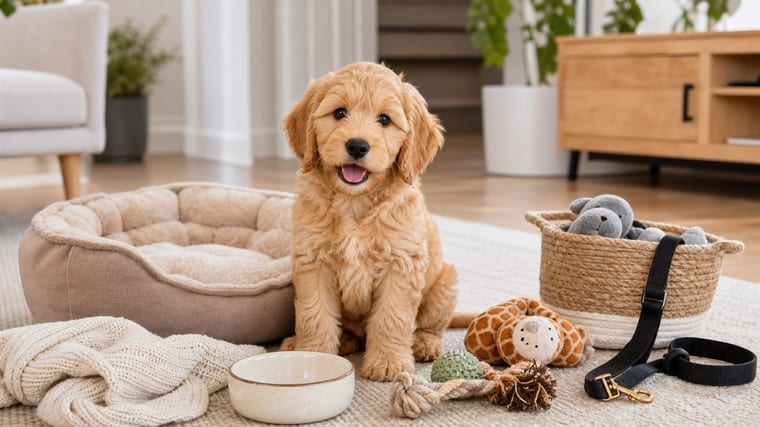
- A crate sized so the pup can stand and turn but can’t claim a far corner as a bathroom
- A washable pad or bed with a waterproof backing
- One soft blanket you can rub on your hands so it carries a familiar scent by night one
Food and water that won’t cause upset
- The exact food the breeder has been feeding — keep it identical for the first stretch and change it slowly, if at all
- Stainless-steel bowls (they clean up better than plastic and hold less bacteria)
- A slow-feeder bowl if you’ve got a small breed that inhales meals
Going outside, safely
- A flat collar or, for small and toy breeds, a harness that’s gentler on the neck
- An ID tag with your phone number — order it early so it’s on before the first walk
- A standard four-to-six-foot leash; skip retractables while you’re training
Cleanup, because there will be cleanup
- An enzymatic cleaner (not ammonia-based — ammonia can smell like a marker and invite repeats)
- Puppy pads if you’re in an apartment or facing a stretch of rainy North Texas weather
- A couple of safe chew toys to redirect teething before it finds your baseboards
Make the Home Safe in an Afternoon
Puppy-proofing sounds like a project. It’s really one slow lap of each room, crouched to puppy height, asking what you’d grab and chew. From down there you’ll spot the dangling charger cord, the houseplant within reach, the gap behind the couch.
A few catches worth naming out loud: cords get bundled or covered; common houseplants like pothos, philodendron, and aloe move up high or out; cabinets holding cleaners get a child lock; trash goes behind a door. Set up a baby gate so the pup has a small, safe zone instead of the run of the house on day one — a bored puppy with too much space finds trouble.
If you’re in a DFW apartment, two extras matter. Check the gaps in any balcony railing — a toy breed can slip through more than you’d guess — and scout the nearest patch of grass before pickup, because a young puppy’s “I need to go” warning is measured in seconds, not minutes.
The First Night and the First Week
The first night is an adjustment for everyone. Your puppy just left its littermates and every familiar smell, so the goal isn’t a perfect routine — it’s a calm landing. Keep the welcome small. Let one or two people say hello in a quiet room rather than throwing a homecoming party.
Expect accidents, and expect interrupted sleep. A crate near your bed lets the pup hear you and makes the inevitable 3am bathroom trip a short one. Through the day, run the same simple loop: outside right after eating, drinking, playing, and waking up. Small breeds often need a break every two to three hours, so set a phone reminder until your eyes learn the signs.
You’ll also notice how much they sleep. A young puppy logs 18 to 20 hours a day, surfacing for short bursts of play and food. That’s not laziness — it’s where the growing happens.
Build the Vet Relationship Early
Line up a vet visit within roughly the first 72 hours. It sets a health baseline and maps out the vaccination and parasite-prevention schedule that carries through the next few months.
Bring the health records that come home with your puppy, a fresh stool sample if you can manage one, and the current food so the vet can weigh in on the diet. Write your questions down beforehand — they evaporate the second a puppy is wriggling on the exam table.
Worth asking while you’re there:
- What’s the full vaccination timeline for this age and breed?
- Stay on the current food, or transition — and how slowly?
- When does spay or neuter make sense?
- Which flea, tick, and heartworm prevention fits a North Texas dog?
On the shots themselves, the DHPP series comes in spaced rounds (commonly around 6–8, 10–12, and 14–16 weeks), rabies lands near 12–16 weeks and is required by Texas law, and your vet may add Bordetella and Leptospirosis depending on your puppy’s life and where it’ll socialize.
A North Texas Wrinkle: Heat
This is the line most generic checklists skip, and it matters more here than almost anywhere. DFW summers run long and hot, and a young puppy can’t shed heat the way an adult dog can. Walk early in the morning or after the sun drops, keep water and shade close, and never leave a puppy in a parked car — not even for the quick errand.
Flat-faced breeds carry extra risk. If you’re bringing home a French Bulldog, a Pug, or a Shih Tzu, treat a 100-degree afternoon as a stay-inside day and watch for heavy panting, drooling, or a pup that suddenly goes flat. When in doubt, cool down and call your vet.
Settling Into the First Month
Past the first week, the work shifts from logistics to habits. Three hold most of the weight:
- One consistent routine. Same feeding times, same potty spots, same bedtime. Puppies read patterns long before they read commands.
- Patient bite training. Nipping is normal exploration. A short, high “ow,” then trade the hand for a chew toy. It clicks with repetition, not volume.
- Careful socializing. Hold off on dog parks until your vet clears the second vaccination round, usually around 10–12 weeks. After that, controlled meetings with healthy, vaccinated dogs — or a vet-run puppy class around the metroplex — beat the chaos of an open park.
If you’re still narrowing down a breed, the care load varies more than people expect. A low-shedding companion like a Cavapoo asks for regular coat upkeep, while a sturdier French Bulldog trades grooming for heat caution. Browsing the small and toy breeds we keep across DFW is a good way to match a puppy’s needs to your actual week.
A Quick Word From Us
When you bring a puppy home from one of our two DFW locations, the questions don’t stop at the door — ask us anything about feeding, the first vet visit, or what your specific breed will need, and you’ll get a clear answer. That’s the whole point of meeting them in person.
Common Questions From First-Time Owners
How soon should I have everything ready?
Have the crate, safe zone, and home puppy-proofed a few days before pickup, since those take the most setup. Food, treats, and an ID tag can wait until the day or two before. Working backward from your pickup date keeps the big jobs from piling onto the last evening.
How much does the first year really cost?
Beyond the puppy itself, plan for initial vet visits, the vaccination series, spay or neuter, food, and supplies like a crate and toys — realistically $1,000 to $2,000 across the first year, and more if an emergency comes up. Budgeting for it early beats being surprised by it later.
When can my puppy meet other dogs?
Wait for your vet’s go-ahead after the second vaccination round, usually around 10–12 weeks, since full immunity isn’t there yet. After that, start with calm, controlled introductions to vaccinated dogs rather than a busy DFW dog park.
Do I need puppy pads if I have a yard?
They help during the first weeks and through stretches of wet North Texas weather, especially for small breeds with smaller bladders. As your puppy learns the outdoor routine and holds it longer, you can phase them out.
What’s the one thing people forget?
An enzymatic cleaner. Accidents are guaranteed early on, and ordinary cleaners leave a scent the puppy reads as a green light to go in the same spot again. Having the right cleaner on hand from night one saves a lot of repeat cleanup.