People usually ask us the question backward. They start with “which breed won’t make me sneeze,” when the more useful starting point is the coat itself. Shedding, dander, and the work a coat asks of you all trace back to a few coat structures — and once you can read those, the breed list more or less sorts itself. This is a guide for the allergy-leaning, small-space DFW buyer who wants the truth about coats before the cuddle.
First, What’s Actually Setting Off Your Allergies
It isn’t the hair. The protein most people react to is Can f 1, made in a dog’s saliva and skin and carried across the coat every time the dog grooms itself. When a heavy-shedding dog drops fur, it scatters that dander everywhere. A dog that holds its hair instead of dropping it keeps far more of that protein contained — which is why “low-shedding” and “easier on allergies” tend to travel together.
So the honest framing: there is no allergen-free dog. There are dogs that put much less of the trigger into your air and onto your sofa. For most allergy-sensitive households, that difference is the whole ballgame. Spend real time with an individual puppy before you decide — reactions are personal, and the coat type only tells you the odds, not your specific outcome.
The Three Coats Worth Knowing
Nearly every small low-shed breed falls into one of three coat structures. Learn these and you can predict a breed you’ve never met.
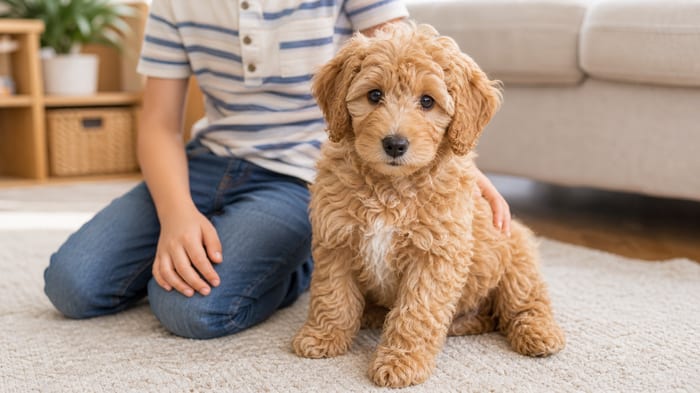
- Single curly coat (the Poodle family). Tight curls that trap loose hair until you brush or clip it out. Lowest dander spread of the group, and the reason Poodle-anything dominates allergy lists. Highest grooming demand to match.
- Silky single coat (hair, not fur). Maltese, Yorkshire Terrier, Shih Tzu. The hair grows like ours — long, slow, with little seasonal drop. Less dander floating around, though the strands you do lose are long and visible.
- Cottony double coat that holds, not sheds. The Bichon Frisé and Havanese carry a softer double coat that catches shed hair inside the coat rather than releasing it. Low airborne dander, but mats fast without routine brushing.
If your allergies are mild, any of the three will feel like a different planet from a Labrador. If a stuffy nose is genuinely affecting your sleep and your days, lean hard toward the curly single coats.
Small Breeds That Earn Their Spot
These are the small non-shedding dogs we see most often in our DFW locations, grouped by the coats above rather than ranked — because the right pick depends on your tolerance and your time, not a leaderboard.
From the curly-coat side: the Toy Poodle sits at the top for low dander and is one of the brightest dogs you’ll ever train. Cross that coat with another low-shed breed and you get the doodle-mix favorites: the Maltipoo (Maltese × Poodle), gentle and apartment-easy, and the Cavapoo (Cavalier × Poodle), calm and people-soft. Both inherit low-allergen tendencies from each parent, though coat texture varies puppy to puppy — curlier usually means lower shedding.
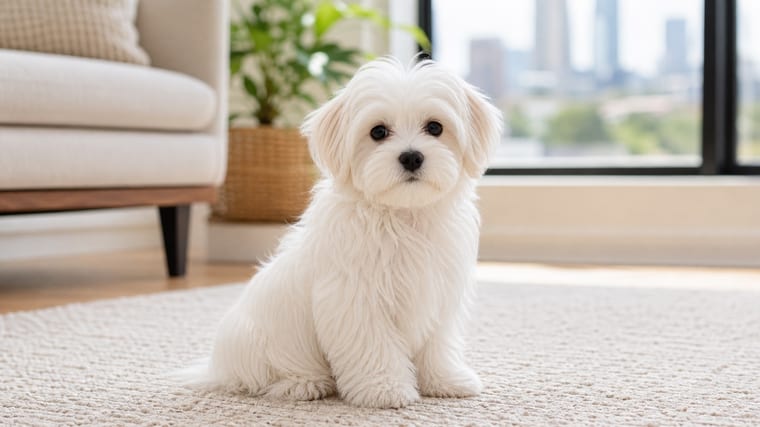
From the silky single-coat side: the Maltese is pure white, has no undercoat, and stays small for life. The Yorkshire Terrier wears a fine, hair-like coat and packs an outsized personality into a few pounds. The Shih Tzu runs a touch sturdier and tends to be unbothered, good with kids, and content as a lap dog.
From the cottony double-coat side: the Bichon Frisé is the cheerful, powder-puff classic that keeps its shed hair tucked inside the coat. The Havanese brings the same low-shed profile with a more outgoing, follow-you-everywhere streak.
You can browse current litters across both locations on the hypoallergenic collection page, or look at the toy and teacup breeds if size is your first filter.
The Size–Coat Tradeoff Nobody Mentions
Small and low-shed sounds like pure upside. There’s a catch worth saying out loud: the coats that shed the least are usually the coats that need the most upkeep. A continuously growing coat doesn’t fall out on its own — it goes to the groomer instead.
Rough grooming math to plan around:
| Coat type | Brushing at home | Professional groom | Mat risk |
|---|---|---|---|
| Curly single (Poodle, Maltipoo, Cavapoo) | Most days | Every 4–6 weeks | High if skipped |
| Silky single (Maltese, Yorkie, Shih Tzu) | 3–4× a week | Every 6–8 weeks | Moderate |
| Cottony double (Bichon, Havanese) | Most days | Every 4–8 weeks | High if skipped |
The trade reads cleanly once you see it: you swap vacuuming and lint rolling for brushing and grooming appointments. For a lot of allergy households that’s a trade well worth making — the dander you control at the brush instead of breathing it off the rug.
Where Texas Weather Comes In
DFW is dry-hot, not humid-tropical, and that shapes coat care more than people expect. Our long summers and low humidity dry out skin, and dry skin flakes more dander — so the season that feels easiest can quietly be the itchiest. A few habits that actually move the needle here:
- Don’t over-bathe in summer. Stripping the coat’s oils in dry heat makes flaking worse. Stick to a grooming rhythm and let the groomer judge.
- Run a HEPA purifier through spring. North Texas cedar, oak, and grass pollen are no joke from late winter into May; the filter pulls pollen and dander together.
- Wipe paws and coat after walks. Mansfield and Fort Worth greenbelts and Dallas trails carry pollen straight back inside on a low-slung small dog.
- Watch the AC dust. A coat that holds hair also holds household dust; the same filter that cools your house is part of your allergy plan.
A groomer who knows your specific coat type is worth finding early — curly and cottony coats behave differently in our dry heat than the breed books written for wetter climates suggest.
How to Choose Without Guessing
A simple way to land on a breed instead of agonizing over the list:
- Rate your allergies honestly. Mild and occasional? Any coat here works. Daily and disruptive? Start with a curly single coat — Toy Poodle, Maltipoo, Cavapoo.
- Be honest about grooming time. Will you brush most days and book a groomer every few weeks? If not, a silky single coat is the more forgiving choice.
- Match the energy to your space. A Shih Tzu or Maltese is happy in a Plano apartment; a young Poodle or Havanese wants a daily walk and a job to do.
- Then meet the actual puppy. Coat type sets the odds; the individual dog settles it. Sit with the one you’re drawn to and see how you feel after an hour.
You can see what’s available right now across our Dallas and Fort Worth-area locations, and if you want a second opinion on which coat fits your home, the team at our North Dallas location is happy to talk it through — no rush, bring the whole family.
Questions DFW Allergy Households Ask Us
Is any small dog truly hypoallergenic?
No dog is fully hypoallergenic — every dog makes the Can f 1 protein in its skin and saliva. The small breeds in this guide simply spread far less of it because they shed so little, which is enough relief for most allergy-sensitive owners. Test it on yourself first by spending real time with the breed.
Which coat type is safest for serious allergies?
The curly single coat of the Poodle family, including Poodle mixes like the Maltipoo and Cavapoo, tends to put the least dander into the air. Among the silky single-coat breeds, the Maltese is a strong pick because it has no undercoat. Pair any of them with regular grooming and a HEPA filter.
Do small non-shedding dogs really need that much grooming?
Yes — that’s the tradeoff for not shedding. Coats that don’t drop hair grow continuously and need brushing most days plus a professional groom every four to eight weeks depending on the coat. The upside is cleaner floors and far less airborne dander between visits.
How does DFW’s climate affect these coats?
North Texas is dry rather than humid, so the main issue is skin drying out and flaking more dander, especially in summer. Avoid over-bathing, keep a steady grooming schedule, and lean on a HEPA purifier through the heavy spring pollen months from late winter into May.
Are doodle mixes always low-shedding?
Mostly, but not guaranteed. A Maltipoo or Cavapoo inherits coat traits from both parents, and curlier coats shed and spread dander less than wavier ones. If allergies are your top concern, ask to meet the specific puppy and feel the coat before deciding.
If a breed guide is what you’re really after, our Maltese, Yorkie and other small-breed pages go deeper on temperament and day-to-day life with each one.