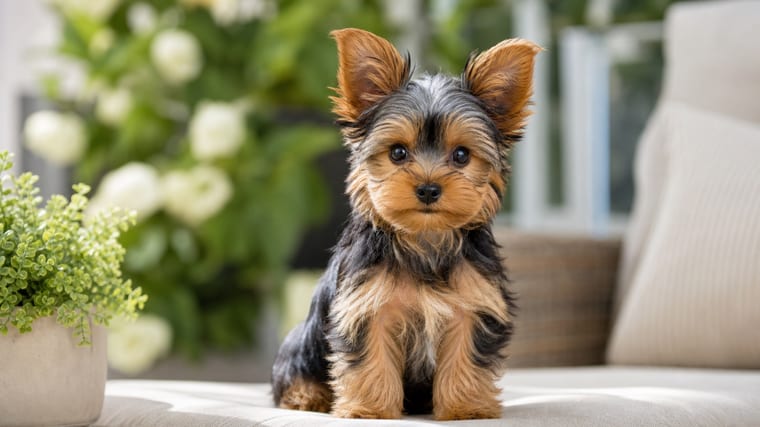
People meet a Yorkshire Terrier and read it as a lap ornament — small, silky, decorative. Then they live with one and discover a terrier in a four-pound body: bold, opinionated, and convinced it runs the house. This guide works from that gap, because almost everything worth knowing about a Yorkie sits in the distance between how the breed looks and how it actually behaves.
The Terrier Hiding Inside the Silk
The Yorkshire Terrier was bred in 19th-century England to hunt rats in textile mills and mines — a working dog scaled down, not a toy that happened to get brave. That history still drives the dog you bring home. A Yorkie is alert, quick to bark at a doorbell, and certain it is the size of a German Shepherd. The coat says lapdog; the wiring says ratter.
What this means day to day is a companion with real personality. Yorkies bond hard to one or two people and want to be wherever you are — under the desk, on the couch arm, trailing you to the kitchen. They are curious and trainable, but they hold an opinion, and a Yorkie that decides the rules are negotiable will test them daily. Treat the breed like the small, smart terrier it is and you get a confident, affectionate dog. Treat it like a fragile accessory and you get a yappy, spoiled one.
A Yorkie by the Numbers
Knowing the standard figures keeps expectations honest before a puppy ever comes home.
- Adult weight: roughly 4 to 7 pounds for a breed-standard Yorkie
- Height: about 7 to 8 inches at the shoulder
- Lifespan: commonly 12 to 16 years — one of the longer-lived breeds
- Coat: fine, straight, and hair-like rather than furry; classic steel-blue and tan once it matures from the puppy’s black-and-tan
- Shedding: very low, which is part of why the breed appeals to allergy-aware homes
- Energy: lively in bursts, content to nap between them; a few short walks plus indoor play usually covers it
That long lifespan is worth sitting with. A Yorkie is genuinely a fifteen-year commitment, and the puppy you choose this spring may still be napping on your couch when a kid in the house is learning to drive.
The Coat Is the Real Job
This is the part new owners underestimate. That show-ring curtain of hair does not maintain itself, and a Yorkie’s coat keeps growing the way human hair does rather than shedding to a set length. You are signing up for upkeep, and it pays to know which version you want before the puppy arrives.
The long “show” coat looks spectacular and demands daily brushing to stay tangle-free, plus regular baths and frequent trims around the eyes and feet. Skip a few days and you get mats that pull at the skin.
The “puppy cut” — a short, even clip — is what most pet owners actually choose, and for good reason. It keeps the dog comfortable, cuts brushing down to a few times a week, and still needs a professional groom roughly every four to six weeks.
Either way, plan on a standing relationship with a groomer and a short list of at-home tools: a fine slicker brush, a metal comb, tear-stain wipes for the corners of the eyes, and a gentle dog shampoo. Yorkie dental care matters too — small mouths crowd teeth, so daily brushing and vet dental checks aren’t optional extras.
The Truth About “Teacup” Yorkies
This is where buyers most need a straight answer, so here it is plainly. “Teacup” is a marketing word, not a breed or an official size class. No legitimate registry recognizes a teacup Yorkshire Terrier. The term simply describes a dog bred to come in under the already-small breed standard — and chasing that extra smallness carries real costs.
Yorkies bred to be unusually tiny, often under three or four pounds full-grown, tend to carry more health fragility: a higher risk of low blood sugar (hypoglycemia) in young puppies, dental crowding, fragile bones, and complications under anesthesia. A dog that small is also genuinely breakable — a jump off the couch or a misjudged step can injure it.
None of that makes a small Yorkie a bad dog. It means the honest move is to want a healthy, well-built Yorkie at the natural low end of the standard, not to pay a premium for the smallest puppy in the litter. If you’re drawn to the tiniest companions, browse the small and toy breeds we keep across DFW with that lens — size as a feature of a sound dog, never the whole pitch. Ask where a puppy came from and how big its parents are; a clear answer is the point.
Is a Yorkie Right for Your Home?
The breed fits some households beautifully and frustrates others. A Yorkie tends to thrive with:
- Adults, retirees, and apartment dwellers who want a portable, devoted companion
- Allergy-aware homes that value a low-shedding coat
- Owners ready to commit to grooming and dental care rather than hoping it sorts itself out
- People who actually want a dog with opinions, not a quiet decoration
It’s a tougher match for homes with very young, rambunctious children — a four-pound dog and a toddler is a fragility problem in both directions — or for anyone who wants a low-maintenance, hands-off pet. Yorkies can also be slow to housetrain and quick to bark, both of which respond to early, patient training and neither of which fixes itself.
Living With a Yorkie in DFW
North Texas adds a few wrinkles worth planning for. Our summers run long and hot, and a tiny dog overheats fast — keep walks to the cool edges of the day and bring water. Winter swings the other way: that fine, hair-like coat offers little insulation, so a clipped Yorkie genuinely benefits from a sweater on a cold Dallas–Fort Worth morning.
Apartment living suits the breed, with one honest caveat — the barking. A Yorkie will announce the hallway, the elevator, and the neighbor’s keys unless you train through it early. On the upside, a portable dog this devoted travels well, settles into a Mansfield townhome or a North Dallas high-rise alike, and asks for less yard than almost any other breed. When you’re ready to meet a few in person, our Dallas location on Inwood Road is a calm place to see how a Yorkie carries itself before you decide.
Where to Go Next
If you’re weighing a Yorkie against other small companions — a Maltese, a Shih Tzu, a Morkie — comparing temperaments side by side beats falling for the first silky coat you see. Take your time, meet a few, and ask us anything about a puppy’s background. You can see which Yorkies and small breeds are available now across both of our DFW locations whenever you’re ready.
Common Yorkie Questions, Answered
Are Yorkies hypoallergenic?
No dog is fully hypoallergenic, but Yorkies come close in practice. Their coat is hair-like and very low-shedding, which means less dander floating around your home. Many allergy-aware owners do well with the breed, though it’s smart to spend time around a Yorkie before committing if allergies are a real concern.
How big does a Yorkie get?
A breed-standard Yorkshire Terrier matures at roughly 4 to 7 pounds and 7 to 8 inches tall. “Teacup” Yorkies marketed under that range aren’t a recognized size class and often come with added health fragility, so a sound dog at the natural low end of the standard is the healthier goal.
Do Yorkies bark a lot?
They can. The breed’s terrier roots make it alert and vocal, so a Yorkie will happily announce visitors, sounds, and movement. Early, consistent training and giving the dog enough mental engagement keep the barking manageable rather than constant.
How much grooming does a Yorkie need?
More than most toy breeds. A long coat needs daily brushing; the common short “puppy cut” needs brushing a few times a week plus a professional groom every four to six weeks. Add regular dental care, since small mouths are prone to crowding and tartar.
Are Yorkies good with kids?
They do best with older, gentle children who understand the dog is small and breakable. With very young or boisterous kids, a four-pound Yorkie risks injury, so supervised, calm interaction is essential. For active family homes, a sturdier small breed is often the easier fit.